
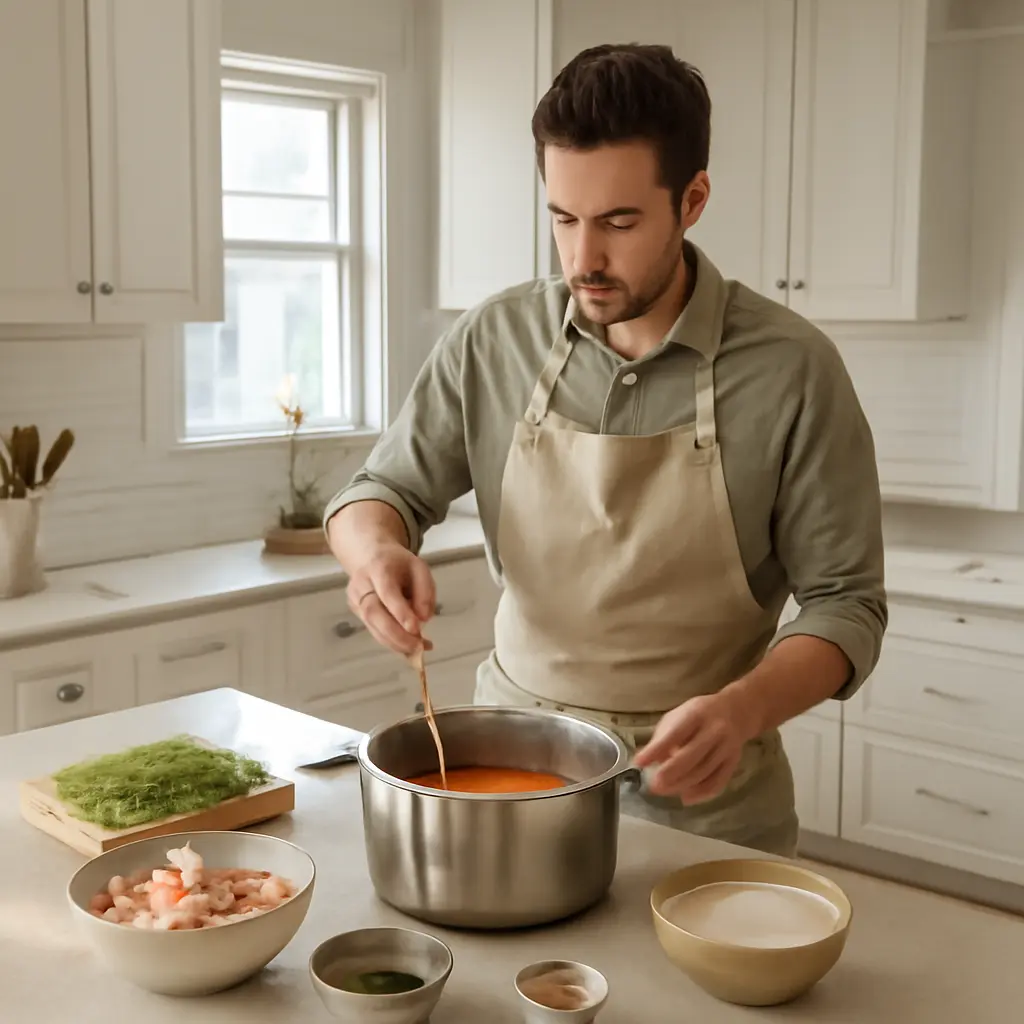
Lobster bisque is a smooth, richly flavored soup built from lobster, aromatic vegetables, seafood stock, and often cream. New cooks most often miss the steps that create its depth: extracting flavor from the shells, building a properly cooked base, blending and straining for a silky texture, and adding cream without letting the soup boil. Those details matter because bisque is an emulsion of carefully layered flavors, not simply lobster meat stirred into cream. The practical guide below explains the defining techniques, common mistakes, food-safety temperatures, and ways to rescue a batch.
Lobster bisque flavor depends on shell extraction
In classic cooking, bisque is a seasoned, strained soup traditionally associated with shellfish; culinary references such as Larousse Gastronomique describe the traditional method as using crustacean shells to build the soup’s flavor and body. Modern recipes vary, but the central principle remains: shells, browned gently with aromatic vegetables and simmered in liquid, contribute a concentrated seafood flavor that lobster meat alone cannot provide.
This is the first distinction new cooks should understand: lobster meat is the garnish and tender centerpiece, while the shell-based stock is the flavor foundation. If you skip that foundation, a bisque can taste like thin cream soup with expensive pieces of lobster in it.
Toast the shells, but do not scorch them
Shell extraction means breaking the cooked lobster shells into manageable pieces, then sautéing them in butter or oil with onion, celery, and carrot until fragrant. The goal is gentle browning, not blackened shells. Scorching can introduce bitter, acrid flavors that remain noticeable even after straining.
Many recipes add tomato paste at this stage. Cook it briefly until it darkens slightly and smells savory; raw tomato paste can taste sharp and metallic. A splash of brandy, sherry, or dry white wine can then loosen the browned bits from the pot. Alcohol is optional, but the browned residue is not: it carries concentrated flavor into the stock.
Simmer a shell stock rather than boiling it hard
A shell stock is the liquid extracted by simmering shells with aromatics and water or unsalted seafood stock. Keep it at a gentle simmer, where small bubbles rise occasionally, rather than a rolling boil. A hard boil can make the liquid cloudy and may produce a rougher, less clean-tasting result.
Avoid treating “longer” as automatically “better.” Shells release flavor, but prolonged cooking can muddy the stock. A practical home-cooking range is roughly 30 to 45 minutes of gentle simmering, followed by careful straining. This is a recipe technique rather than a food-safety rule, so use taste and aroma as guides: the stock should smell deeply savory, not burnt or excessively fishy.
Lobster bisque texture comes from controlled thickening
Texture is the second defining attribute of bisque. The desired result is smooth and cohesive, with enough body to coat a spoon but not so much starch or cream that it feels pasty. That texture may come from a small roux, rice cooked in the soup and blended, or reduction of the stock. These are related methods, but they are not interchangeable in effect: roux gives a classic, stable thickness; rice can produce a soft, rounded body; reduction concentrates flavor without adding starch.
Cook the roux fully before adding liquid
A roux is a cooked mixture of fat and flour used to thicken sauces and soups. Stir flour into melted butter and cook it briefly before whisking in stock. This removes the raw-flour taste and helps the liquid thicken evenly. Add stock gradually while whisking so flour does not form lumps.
The common mistake is adding flour directly to hot soup or using too much roux to compensate for a thin stock. Either can leave the bisque chalky or gluey. Start with less thickener than you think you need; the soup will gain body as it simmers and as cream is added.
Blend carefully and strain for a silky finish
Blending breaks down cooked vegetables and any softened shell fragments into a finer mixture. Straining afterward through a fine-mesh sieve removes shell pieces and fibrous material that a blender may not fully eliminate. This two-step finish is especially useful when the shells have simmered in the pot.
Use caution when blending hot liquid: steam can force the lid off a countertop blender. Work in small batches, leave room for expansion, secure the lid, and cover it with a folded towel while holding it in place. An immersion blender reduces transfer risk, but it does not replace straining when a very smooth texture is the goal.
Lobster bisque needs gentle finishing and safe handling
Once the stock is strained and thickened, the remaining challenge is preserving the lobster’s tenderness and the soup’s smoothness. Cream, butter, and lobster meat are finishing ingredients: they round out the flavor, but they are easy to mishandle if the soup is boiled or held hot for too long.
Add cream near the end; avoid a rolling boil
Cream is dairy fat dispersed in liquid, and it contributes richness and a softer mouthfeel. Stir it in near the end over low heat. Once cream is added, heat the bisque gently and avoid a vigorous boil, which can destabilize the mixture and make it look separated or grainy. If the soup needs thinning, use warm stock rather than cold liquid, then adjust salt and acidity.
Cream is not a substitute for seasoning. Taste the soup before serving and adjust salt, pepper, and a small amount of lemon juice or sherry if the flavor feels heavy. Add acidity cautiously: too much can overpower the lobster and make the dairy seem less harmonious.
Keep lobster meat tender and follow food-safety guidance
Reserve cooked lobster meat and add it at the end just long enough to warm through. Prolonged simmering makes it tough and dry. For raw lobster, the U.S. Food and Drug Administration’s seafood guidance recommends cooking fish and shellfish to an internal temperature of 145°F (63°C), measured with a food thermometer; follow the package and local food-safety guidance for the specific product you use.
For leftovers, refrigerate promptly in shallow containers rather than leaving a large pot at room temperature to cool slowly. The U.S. Department of Agriculture advises refrigerating perishable food within two hours, or within one hour when the surrounding temperature is above 90°F (32°C). Reheat soup thoroughly, stirring so it warms evenly, but do not use a hard boil as a shortcut.
Lobster bisque mistakes and practical fixes
Most disappointing batches can be diagnosed by separating flavor problems from texture problems. A thin soup needs concentration or restrained thickening; a bland soup needs a better-tasting base and balanced seasoning; a grainy soup needs careful straining and gentler reheating. The following fixes are best applied gradually, tasting after each adjustment.
- Weak lobster flavor: Simmer the strained soup briefly to concentrate it, or enrich it with a small amount of well-made seafood stock. Do not compensate with excessive salt.
- Thin texture: Reduce the soup gently before adding cream, or whisk a small amount of roux into a separate portion of warm stock before stirring it back in.
- Grainy or gritty texture: Pass the soup through a fine-mesh sieve. If it has separated, remove it from the heat and whisk in a little warm stock or cream; avoid boiling.
- Rubbery lobster: The meat was likely cooked too long. For the next batch, reserve it and warm it in the finished soup just before serving.
- Overly rich flavor: Loosen the soup with warm stock and add a few drops of lemon juice or a little dry sherry, tasting as you go.
- Bitter or burnt flavor: Scorched shells, garlic, or tomato paste are likely causes. That bitterness is difficult to remove, so prevention—moderate heat and frequent stirring—is more effective than adding sugar or more cream.
Conclusion: lobster bisque rewards patience and restraint
Good lobster bisque starts with flavor extracted from shells, develops body through controlled thickening, and finishes with smooth blending, careful straining, and gently warmed cream and lobster meat. The most useful rule for new cooks is to build flavor in stages rather than trying to fix everything with extra cream or seasoning at the end. Toast shells without scorching them, simmer rather than boil, taste before thickening further, and handle hot soup safely. For your next batch, focus on one technique at a time—especially shell stock and gentle finishing—and compare the result with the rushed version you may have made before.
Sources: Larousse Gastronomique, “Bisque” entry, https://www.worldcat.org/title/larousse-gastronomique/oclc/1033648434; U.S. Food and Drug Administration, Selecting and Serving Fresh and Frozen Seafood Safely, https://www.fda.gov/food/buy-store-serve-safe-food/selecting-and-serving-fresh-and-frozen-seafood-safely; U.S. Department of Agriculture, Leftovers and Food Safety, https://www.fsis.usda.gov/food-safety/safe-food-handling-and-preparation/food-safety-basics/leftovers-and-food-safety.