
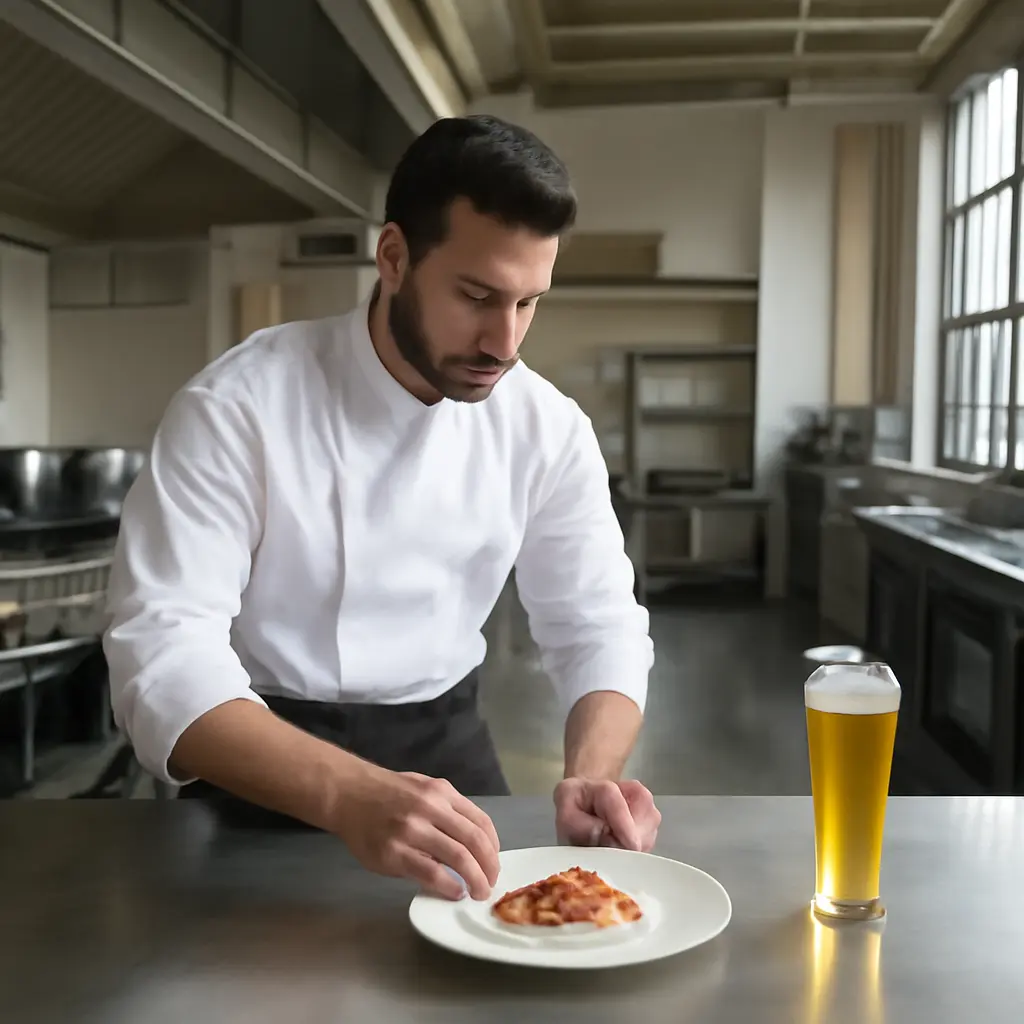
A delicate scallop has a sweet, mild flavor and tender texture, so a heavy stout can overwhelm it rather than complement it. A crisp pilsner, saison, wheat beer, or restrained pale ale is usually a better match: these lighter styles refresh the palate while letting the shellfish remain the focus. The best choice depends on how the scallops are prepared, since searing, butter, citrus, and rich sauces each shift the balance. A practical rule is to match intensity first, then use carbonation, acidity, and modest bitterness to keep each bite lively.
Why lighter beer suits delicate scallops
Scallops are prized for a naturally sweet, subtle taste. The National Oceanic and Atmospheric Administration describes sea scallops as mildly sweet, while the U.S. Department of Agriculture’s FoodData Central lists cooked scallops as a lean source of protein. Their relatively gentle flavor can be crowded out by a beer with pronounced roast, alcohol warmth, or heavy bitterness.
Pairing by intensity is a useful starting point: delicate food generally calls for a restrained drink, while richer preparations can handle more flavor. Carbonation can also help refresh the palate after butter or oil, and a clean, crisp finish avoids lingering roast flavors. These are sensory guidelines, not rigid rules—personal preference and the whole dish matter.
Lighter beer styles for scallops
Beer sommelier Garrett Oliver, in The Brewmaster’s Table, approaches food pairing through complementary and contrasting flavors, as well as the intensity of both food and beer. Applied to scallops, that means choosing a beer whose flavor does not dominate, while allowing its bubbles or gentle acidity to balance the preparation. Suitable options include pilsners, saisons, wheat beers, and mild pale ales.
Pilsner: crisp and clean
A pilsner is a pale lager known for a clean fermentation character, lively carbonation, and gentle hop bitterness. Its refreshing finish works especially well with simply grilled or pan-seared scallops, where it clears the palate without introducing strong roast or sweetness. Choose a restrained, balanced example rather than an especially bitter or high-alcohol version.
Saison: dry, aromatic, and food-friendly
Saison is a farmhouse-style ale that is often dry, effervescent, and lightly fruity or peppery. Those qualities can complement browned edges on seared scallops and cut through a butter-based sauce. Because saisons vary, look for one with moderate strength and restrained spice so its yeast character supports the dish rather than taking it over.
Wheat beer: soft fruit and gentle refreshment
Wheat beers often have a soft body and bright, sometimes citrus-like or fruity aromas. A restrained wheat beer can suit scallops served with lemon, herbs, or a light salad. Strong banana, clove, or sweetness may compete with the seafood, so the gentlest examples are the safer match for lightly seasoned scallops.
Mild pale ale: a little hop character
A pale ale can work when the scallops are grilled, seasoned assertively, or served with a tangy accompaniment. Its hop bitterness and citrus or floral notes add contrast, but intense bitterness can make delicate seafood seem faint. Choose a lower-bitterness pale ale and avoid heavily hopped, high-alcohol versions for a simple scallop preparation.
Match the beer to the scallop preparation
The cooking method changes the dish’s intensity. A lightly poached scallop needs a quieter pairing than a deeply browned scallop served with a rich sauce. Think of the complete plate—not just the shellfish—when selecting a beer.
Simply seared or grilled scallops
For scallops seasoned mainly with salt, pepper, and a little oil, choose a crisp pilsner or restrained wheat beer. If grilling adds smoke and browned flavor, a dry saison or mild pale ale can provide a little more presence without overwhelming the seafood.
Scallops with butter, cream, or cheese
Rich sauces call for a beer with enough carbonation and dryness to keep the pairing from feeling heavy. A dry saison or crisp lager can provide that contrast. Avoid assuming that a stronger beer is automatically better: high alcohol and roasted malt may add weight rather than refreshment.
Scallops with citrus, herbs, or spice
Lemon, fresh herbs, and light vinaigrettes pair naturally with crisp lagers and bright wheat beers. For chili or pronounced seasoning, a mild pale ale can meet the dish’s extra intensity. Keep the beer’s bitterness moderate, particularly when the scallops themselves are lightly cooked.
Why a heavy stout can bury scallops
Stout is a broad family rather than a single flavor profile, but many examples feature roasted malt, coffee-like or chocolate-like notes, a fuller body, and a persistent finish. Those traits can dominate scallops’ mild sweetness. Some dry or lower-alcohol stouts may work with a strongly browned preparation, but a robust imperial stout is usually a poor match for simply cooked scallops.
This is a matter of balance, not a rule against stout. If you enjoy the contrast, taste the beer and scallop together and judge whether the shellfish remains recognizable. Otherwise, reserve the stout for a richer dish and choose a lighter beer for the seafood.
A simple tasting method
- Start with the scallops as served, including their sauce or garnish.
- Take a small sip of beer, then a bite of scallop, and notice whether the seafood’s sweetness remains clear.
- Try the order again with a bite followed by a sip to see whether carbonation refreshes the palate.
- If the beer lingers longer than the scallop’s flavor, choose a lighter or less bitter option.
Conclusion: choose refreshment over roast
Delicate scallops generally pair best with beer that is crisp, dry, and moderate in flavor. Pilsner is a dependable choice for simple preparations; saison suits browned scallops and richer sauces; wheat beer complements citrus and herbs; and a mild pale ale can handle more assertive seasoning. Heavy stouts can bury the shellfish’s subtle sweetness, so match the beer to the full dish and let the scallops remain the star. For further exploration, compare two lighter styles alongside the same preparation and choose the one that leaves the cleanest, most balanced finish.
Sources: National Oceanic and Atmospheric Administration, Sea Scallops, https://www.fisheries.noaa.gov/species/sea-scallop; U.S. Department of Agriculture, FoodData Central, Scallops, cooked, https://fdc.nal.usda.gov/; Garrett Oliver, The Brewmaster’s Table: Discovering the Pleasures of Real Beer with Real Food, Ecco, 2003.