
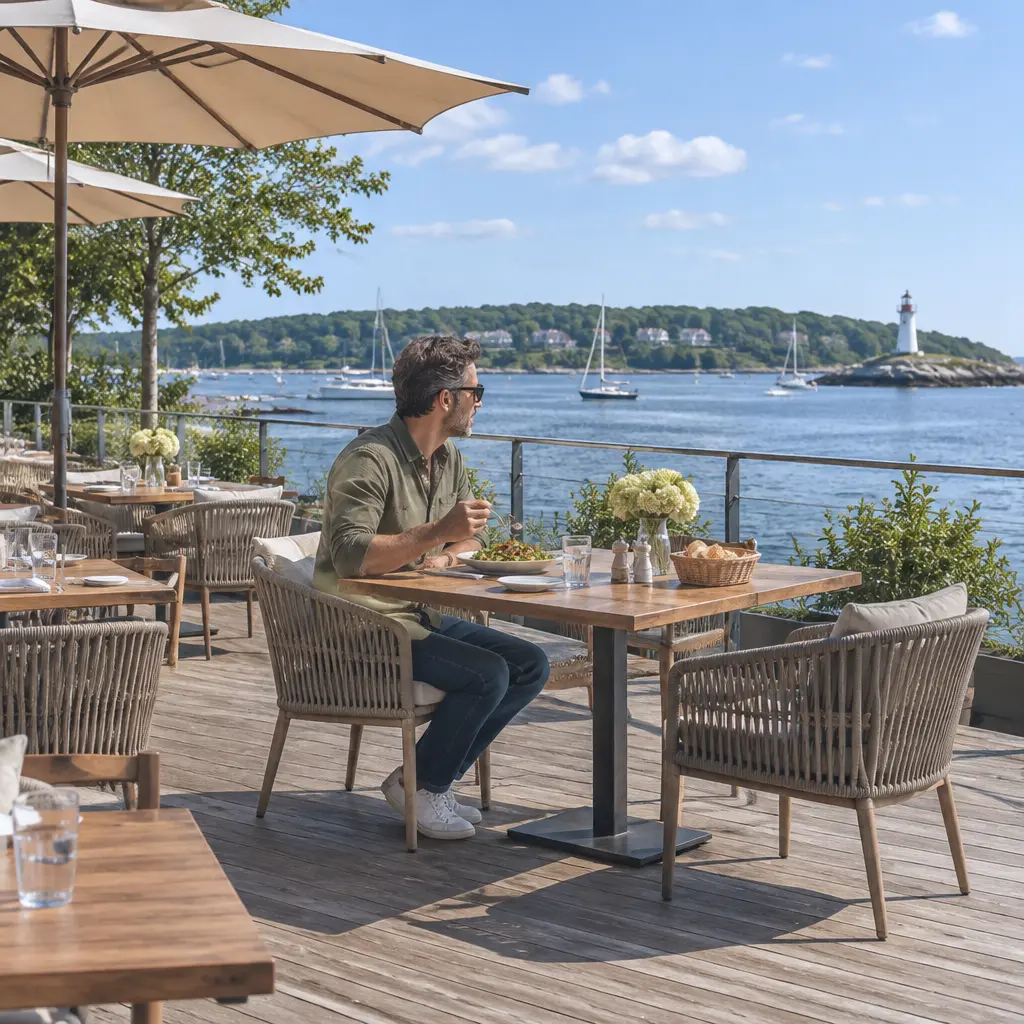
A waterfront dining atmosphere combines a restaurant’s sensory setting with views of a river, lake, harbor, or ocean. Scenic water views can enhance diners’ flavor perception by shaping mood, attention, and expectations, but they do not change the food itself—and the effect depends on factors such as view quality, noise, comfort, and individual preference. Research on environmental psychology and multisensory perception supports this connection, while hospitality studies and customer surveys show that ambience is a meaningful part of the dining experience. This article explains how waterfront scenery may influence perceived flavor, which design features matter, what evidence can and cannot establish, and how restaurants can assess the effect responsibly.
Waterfront Atmosphere and Flavor Perception: How Scenic Views Shape Dining
Scenic Views Influence Waterfront Flavor Perception
Flavor perception is the integrated experience of taste, smell, texture, temperature, and other sensory cues—not simply the activity of taste buds. Charles Spence, an experimental psychologist at the University of Oxford, has described flavor as a multisensory experience in which visual, auditory, tactile, and contextual cues can influence what people expect and perceive when eating. A waterfront view is therefore best understood as a contextual cue: it may alter diners’ attention, emotional state, and expectations, which can affect reported enjoyment or flavor intensity without changing the dish’s chemical composition.
The distinction matters. A pleasant view may make a meal feel more relaxing or memorable, but it is not proof that every diner will taste a food as sweeter, fresher, or more flavorful. Effects vary with the person, the dish, the setting, and the quality of the view. Research on multisensory dining supports the general mechanism; direct evidence isolating waterfront views from other restaurant features is more limited.
The multisensory definition of flavor
Taste refers to sensations such as sweetness, saltiness, sourness, bitterness, and umami. Flavor also incorporates retronasal smell—the aromas that travel from the mouth to the nose—as well as texture, temperature, and contextual expectations. The National Institute on Deafness and Other Communication Disorders notes that smell contributes substantially to what people commonly describe as flavor. Because visual context can guide expectations before a bite, a scenic setting may influence the overall experience even when the food and recipe remain constant.
What research says about visual context
Experimental studies in multisensory perception show that appearance and surroundings can affect food expectations and judgments. Spence’s review of eating and drinking environments discusses how visual cues, tableware, lighting, and other contextual factors can shape reported sensory experience. This supports a plausible pathway for scenic views, but it does not establish a universal waterfront “flavor boost.” To demonstrate a view-specific effect, a study would need to compare equivalent meals under controlled conditions while measuring the view, mood, expectations, and sensory ratings.
Why expectations and mood matter
A visible shoreline may signal freshness, leisure, or escape, particularly when the menu features seafood or regional ingredients. Those associations can influence expectations before tasting. Calm scenery may also help some guests relax and attend to the meal, while others may be distracted by crowds, glare, wind, or boat traffic. These are mechanisms and plausible individual responses—not guarantees that a waterfront meal will taste better.
Waterfront Atmosphere Shapes Dining Through Distinct Environmental Cues
A waterfront atmosphere is not just a view. It is a bundle of environmental attributes, including sightlines, daylight, sound, temperature, seating comfort, and the relationship between the restaurant and the water. Separating these attributes helps explain why two restaurants beside the same bay can deliver very different experiences. The following categories connect scenic appeal to practical design and operational decisions.
Visual access and view quality
Visual access means whether diners can see the water clearly from their seats, rather than merely being near it. View quality may depend on distance, obstructions, orientation, weather, and the presence of memorable features such as a harbor, wetland, or sunset. In restaurant planning, this makes seating layout consequential: windows, terraces, and table placement can determine how many guests actually receive a water view. A useful operational measure is the share of seats with unobstructed sightlines, tracked alongside guest ratings rather than treated as a proxy for satisfaction by itself.
Soundscape and acoustic comfort
A soundscape is the acoustic environment as experienced by people in a place. Water sounds may contribute to a sense of calm, but waterfront venues can also face wind, road traffic, crowds, vessels, and amplified music. A widely used occupational reference from the U.S. Occupational Safety and Health Administration identifies 85 decibels averaged over eight hours as the permissible-exposure benchmark for many workplace noise programs; this is a worker-safety reference, not a recommended dining-room target. For guest comfort, restaurants should assess whether conversation is easy, avoid assuming that louder water sounds are inherently relaxing, and consider acoustic treatment where practical.
Light, weather, and thermal comfort
Natural light can make a water view more vivid, but direct sun, reflections, heat, cold, and changing weather can reduce comfort. A patio that feels restorative on a mild evening may become unpleasant in strong wind or midday glare. Shade, adjustable screens, outdoor heaters where appropriate, and flexible seating can help preserve access to the scenery without making comfort depend on ideal weather. These features also support equitable access for guests who may need sheltered seating or an indoor alternative.
Menu, place, and sensory congruence
Sensory congruence occurs when environmental cues and food presentation feel consistent. A menu highlighting locally sourced fish or coastal produce may feel fitting beside a working harbor, while a carefully described origin can make the connection more credible. The view alone does not verify provenance or sustainability. Restaurants should make sourcing claims only when they can substantiate them, and should avoid implying that scenery guarantees freshness, food safety, or superior nutrition.
Waterfront Dining Design Connects Scenic Appeal with Guest Experience
Once the environmental cues are separated, the practical question is how to design and operate a dining room that lets scenery complement food rather than compete with it. A successful waterfront experience balances visual access with comfort, service, acoustics, and reliable food quality. It also recognizes that the view is only one part of hospitality: guests may value accessibility, welcome, timing, and price as much as the setting.
Seating and sightline planning
Sightline planning is the arrangement of tables and circulation paths to preserve useful views without compromising service or accessibility. Operators can map which tables have clear water views, note seasonal obstructions, and offer transparent booking options where feasible. A simple seating audit—recording view access, glare, noise, and guest feedback by table—can reveal whether perceived value is concentrated in a small number of premium seats.
Service, pacing, and storytelling
Service pacing can help diners notice the setting without allowing it to overshadow the meal. Staff can describe a dish’s ingredients, preparation, or verified local sourcing in concise terms, connecting the menu to place without making unsupported sensory promises. Hospitality research commonly treats ambience, service, food, and value as related but distinct dimensions of the guest experience; an attractive setting cannot reliably compensate for poor service or inconsistent cooking.
Accessibility and inclusive waterfront use
Inclusive design makes the experience usable by people with different mobility, sensory, and comfort needs. Step-free routes where required, accessible seating, clear circulation, dependable indoor options, and menus available in readable formats help ensure that a scenic location does not become a barrier. Waterfronts can also be exposed to weather and uneven surfaces, so operators should communicate access conditions clearly and maintain safe routes to dining areas.
Waterfront Flavor Claims Require Careful Measurement
Because “the view made the food taste better” can describe several different outcomes, restaurants and researchers should define what they mean before collecting evidence. A guest might report greater enjoyment, stronger flavor, improved relaxation, or better value; those are not interchangeable measures. Separating them helps distinguish a genuine sensory shift from a general positive impression of the occasion.
Guest surveys and experience metrics
A guest survey can ask separately about food quality, flavor intensity, ambience, view satisfaction, noise, comfort, and likelihood of returning. Restaurants can compare results across seating zones and weather conditions, while protecting guest privacy and avoiding leading questions. The U.S. National Restaurant Association’s annual industry reporting tracks consumer and operator trends, but broad restaurant-industry findings should not be presented as direct evidence that waterfront scenery alters taste.
Controlled tasting comparisons
A controlled comparison could serve the same dish, in the same portion and presentation, to groups assigned to a water-view setting and a visually neutral setting. Researchers would record sensory ratings and control, as far as possible, for lighting, noise, service, time of day, and participant expectations. Random assignment and repeated trials would strengthen the design. If the goal is to test perception rather than general satisfaction, participants should rate specific attributes—such as aroma, saltiness, or tenderness—separately from overall enjoyment.
Limits, confounders, and responsible interpretation
Waterfront restaurants often differ from comparison venues in price, menu, architecture, service, and occasion, making it difficult to attribute customer ratings to the view alone. A special-occasion meal may also produce higher ratings regardless of scenery. Results should therefore be described as associations unless the study design supports causal conclusions. A compelling view can enrich an experience, but it should not be marketed as a proven method for changing taste or as a substitute for high-quality food.
Waterfront Flavor Perception Has Practical and Place-Based Implications
Waterfront dining connects hospitality to local landscapes and communities. When operators treat scenery as an asset to care for—not merely a backdrop—they can make the setting more meaningful while avoiding exaggerated claims. The broader implications include stewardship, truthful communication, and recognition that access to attractive public environments is part of the guest experience.
Real-world application: harbor and shoreline restaurants
A harbor restaurant can connect its menu to the working waterfront by identifying verified suppliers, explaining seasonal availability, and offering views that reveal the place’s character. A lakefront venue might prioritize quiet seating, accessible paths, and protection from glare, while a coastal patio may need wind management and flexible indoor seating. These examples illustrate design applications rather than claims of measured flavor improvement; each venue should test guest responses in its own context.
Environmental stewardship and community context
A waterfront view depends on the health and accessibility of the waterfront itself. The U.S. Environmental Protection Agency’s National Coastal Condition Assessment monitors ecological conditions in U.S. coastal waters, underscoring that coastal settings are managed environments with measurable environmental pressures. Restaurants can support responsible use by reducing litter, following local rules for shoreline access, communicating accurately about local seafood, and considering how lighting and noise affect nearby residents and wildlife.
Conclusion: Scenic Views Can Enrich, but Do Not Guarantee, Flavor
Waterfront atmosphere can shape flavor perception because eating is multisensory: visual context, mood, expectation, sound, and comfort all contribute to the experience people report. The strongest practical approach is to treat the view as one element of hospitality, alongside food quality, service, accessibility, and environmental care. Restaurants can improve their decisions by measuring view access and guest responses, testing specific claims carefully, and describing local ingredients truthfully. For further reading, consult research on multisensory food perception and official guidance on coastal conditions; for operators, begin with a seating, comfort, and feedback audit of the waterfront dining area.
Sources: Spence, Charles, “Multisensory Flavor Perception,” Cell, 2015, https://doi.org/10.1016/j.cell.2015.03.007; Spence, Charles, “Eating with Our Eyes: From Visual Hunger to Digital Satiation,” Brain and Cognition, 2018, https://doi.org/10.1016/j.bandc.2017.06.006; National Institute on Deafness and Other Communication Disorders, “Taste Disorders,” https://www.nidcd.nih.gov/health/taste-disorders; U.S. Occupational Safety and Health Administration, “Occupational Noise Exposure,” https://www.osha.gov/noise; National Restaurant Association, “Research and Media,” https://restaurant.org/research-and-media/; U.S. Environmental Protection Agency, “National Coastal Condition Assessment,” https://www.epa.gov/national-aquatic-resource-surveys/ncca.